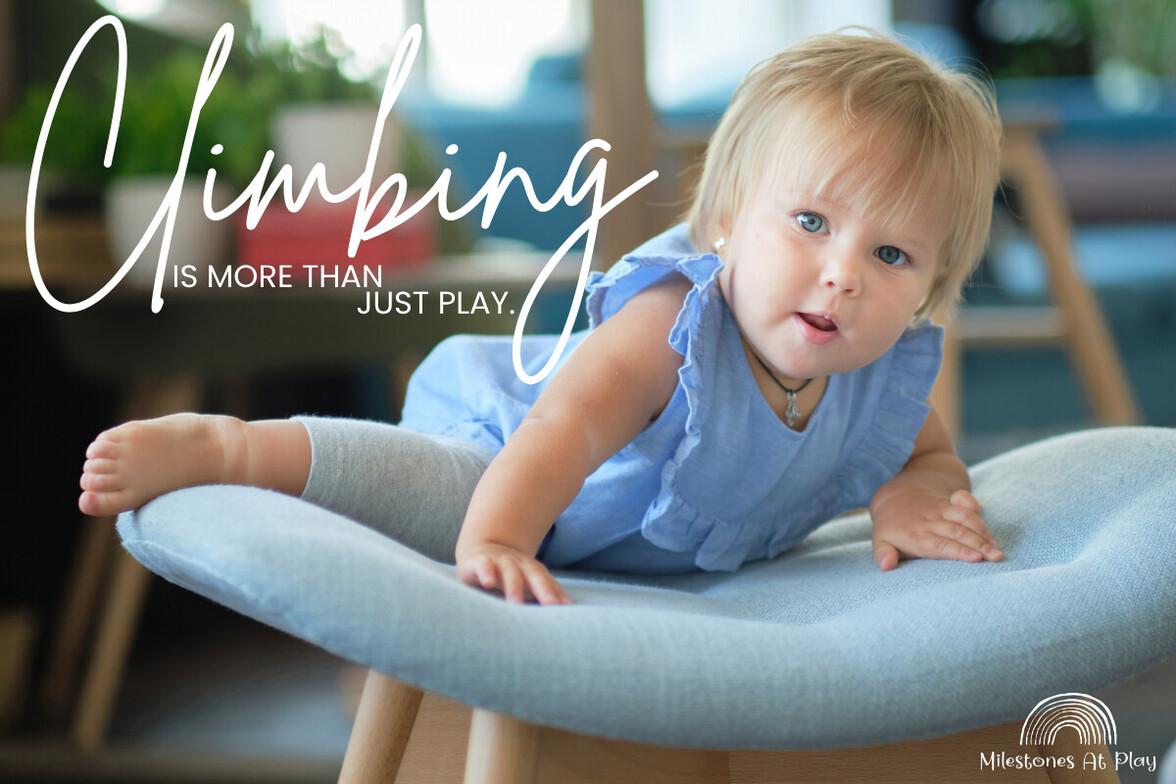
It’s a phrase most parents say at least once a day: “Please don’t climb on that!”
But the truth is, climbing is actually very important to a child’s development. For babies, toddlers, and young children, climbing is more than just play—it’s a full-body learning experience that helps build strength, coordination, confidence, and body awareness.
When children climb, their brains and bodies are working together in powerful ways. They are learning how to shift their weight, plan their movements, solve problems, and understand where their body is in space. Climbing also provides important vestibular input, which supports balance, coordination, attention, and regulation.
Ultimately, climbing helps kids grow stronger physically and developmentally. Some of those developmental benefits that climbing supports are:
- Core and upper body strength
- Balance and coordination
- Motor planning and problem-solving
- Spatial awareness
- Confidence and independence
- Sensory and vestibular development
Climbing Ideas by Age
The best part is that climbing opportunities can start much earlier than many parents realize—and they don’t have to involve a giant playground.
Babies and Early Crawlers (0–12 months)
Once babies begin crawling and pulling to stand, they naturally start looking for ways to explore vertically. So, let them:
- Crawl over couch cushions or pillows
- Experience soft obstacle courses on the floor
- Climb up a small foam wedge or nugget couch
- Practice climbing up a toddler slide with supervision
- Pull-to-stand at safe furniture surfaces
These activities help babies develop body awareness, strength, and coordination in a safe and playful way.
Toddlers (1–3 years)
Toddlers are natural climbers because their bodies are craving movement and exploration. Give them the freedom to:
- Climb playground steps and toddler climbing structures
- Clamber over indoor climbing cushions or foam blocks
- Climb into laundry baskets or forts
- Walk up and down inclines or soft surfaces
- Scale small indoor obstacle courses
This stage is especially important for developing motor planning and confidence.
Preschoolers and Young Children (3–6 years)
As children grow, climbing becomes more advanced and imaginative. Let them tackle:
- Playground rock walls or climbing domes
- Tree stumps, logs, or nature play
- Monkey bars with assistance
- Pillow “mountains” indoors
- Obstacle courses that involve climbing, crawling, and balancing
At this age, climbing also supports risk assessment, coordination, and independence.
Safe, Purposeful Play
Of course, safety matters. Supervision and age-appropriate challenges are key. But in many cases, instead of stopping climbing altogether, we can look for safe ways to say “yes” to the movement their bodies are seeking.
At Milestones at Play, we love helping families understand how purposeful play supports development in everyday life. If you ever have questions about your child’s gross motor skills, coordination, balance, or developmental milestones, we’re always here to help.