Read the same book. Roll the same ball. Climb onto the couch. Get down. Climb back up. And then do it all over again.
Sound familiar?
If you’ve ever wondered why your baby or toddler wants to do the same thing a hundred times, you’re definitely not alone! While all that repetition might seem a little boring to us, there’s actually a whole lot of learning happening behind the scenes.
For little ones, repetition isn’t just fun. It’s how they learn.
Practice Makes Progress
Think about learning something new. The first few attempts might feel awkward or challenging. But the more you practice, the easier it gets.
The same is true for babies and toddlers!
Every time your baby reaches for a toy, rolls onto their belly, or pulls up to stand, they’re practicing movements that help build strength, coordination, and body awareness.
And when your toddler climbs the same step over and over? They’re learning how to shift their weight, find their balance, and coordinate their movements.
Each attempt gives their brain and body another opportunity to work together.
Repetition Builds Confidence
Remember the excitement on your child’s face when they finally figured out how to do something all by themselves?
That’s a big deal!
Repeating familiar activities gives children opportunities to experience success. As movements become more comfortable, they often gain the confidence to try something a little more challenging.
Maybe your baby starts reaching a little farther for a toy. Or your toddler who needed help climbing onto a cushion yesterday suddenly figures out how to do it on their own.
Those little victories add up!
Familiar Play Creates New Opportunities
Just because your child is repeating an activity doesn’t mean they’re doing it exactly the same way, though.
That ball they’ve rolled across the floor twenty times? Maybe now they’re reaching a little farther, using their other hand, or crawling after it.
The playground steps they’ve climbed all week? They might be getting faster, steadier, or more confident about coming back down. Same activity. New skills.
Repetition gives children a familiar starting point while allowing them to experiment, problem-solve, and discover new ways to move.
Let Them Do It Again!
The good news? You don’t have to constantly come up with new activities to support your child’s development. Sometimes the best thing you can do is let them enjoy the familiar ones.
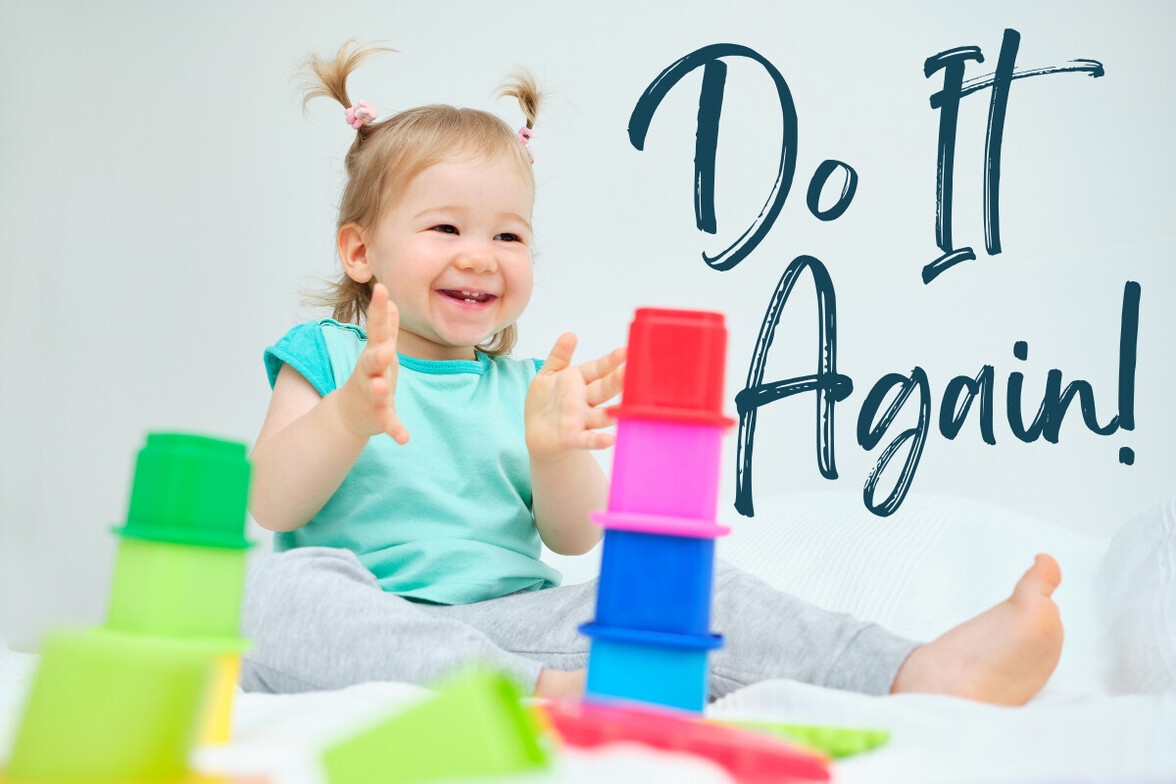
Roll the ball again. Build the block tower again. Crawl through the tunnel again. Dance to that favorite song for the tenth time.
And when they’re ready, try changing something small. Move the toy a little farther away. Add another cushion to climb over. Roll the ball in a different direction.
Keep it simple, follow their lead, and let them enjoy the process.
There’s a Reason They Keep Saying “Again!”
Babies and toddlers aren’t repeating activities because they’ve stopped learning.
They’re repeating them because they’re still learning.
Every reach, roll, climb, and wobble gives their growing bodies another opportunity to practice and build new skills.
So the next time your little one asks you to do something again (and again…and again!), remember that all that repetition is helping them grow.
At Milestones at Play, we believe some of the biggest developmental gains happen through the simplest moments of play. If you have questions about your child’s gross motor development, we’re always here to help!